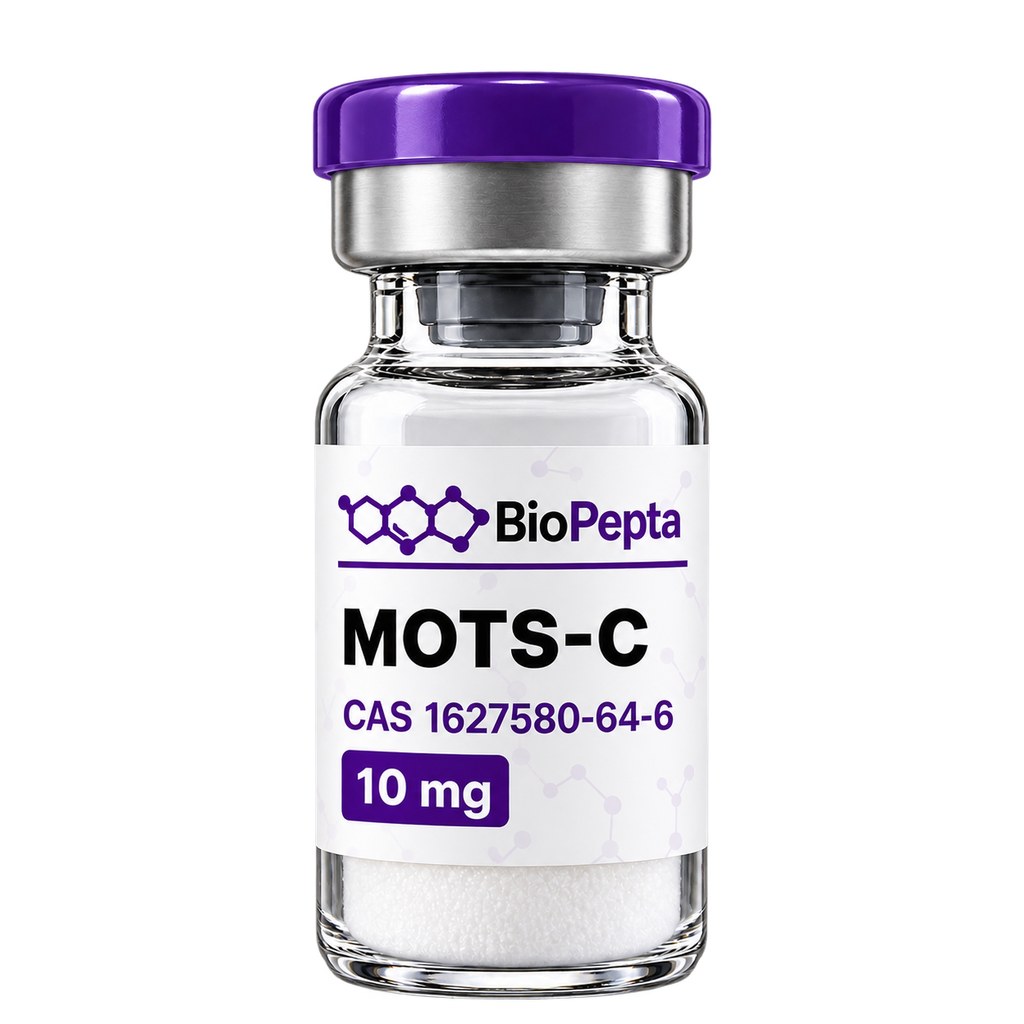
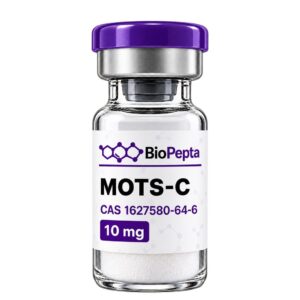
MOTS-c 10mg (10 Vials / Kit)
In Stock
A 16-residue peptide encoded in mitochondrial DNA, studied in cell and rodent work for how mitochondria may signal to the nucleus and influence AMPK activity and metabolism.
- In the kit: 10 × 10mg
- Cost per mg: $0.618
- Third-party report: Attached
- Dispatches from: China
- 1–4 kits$61.80full price
- 5+ kits$58.715% off
- 10+ kits$55.6210% off
- 20+ kits$54.3812% off
- 50+ kits$52.5315% off
- 100+ kits$49.4420% off
Minimum order $100.00 across all brands, before the escrow fee.
 China
View report · How to read it · All reports
For research use only. Not for human consumption. Not medical advice.
Sold by BioPepta: 10 vials of 10mg (100 mg altogether), dispatched from China. You pay $61.80 for the kit, which comes to $0.618/mg. Funds sit in escrow until delivery is confirmed, then they are released to BioPepta.
Against other brands
Comparing per-milligram cost across 27 MOTS-c listings, most fall between $0.62 and $3.89. This kit, at $0.618, is inside the typical range. Price alone says little about quality, so weigh it against the lab data below.
This listing: BioPepta MOTS-c
- Brand
- BioPepta
- Kit
- 10 vials × 10 mg (100 mg in total)
- Price per vial
- $6.18
- Price per mg
- $0.62
- Also sold by
- Jinlu Peptides 10mg $185.40 · HPEBIO 10mg $75.00 · Zyn Pharma 10mg $320.00 · UWA Biotech 10mg $75.00 · SynTide Research 10mg $65.00 · European Peptide Sciences 10mg $389.00
Lab testing
BioPepta published a Janoshik #235267 report for this compound. Test: Purity (HPLC). Result: 99.3% purity · 10.89mg. Tested Sep 25, 2026. Verification key KNFKDWTNMAET can be checked at janoshik.com.
View the report · How to read it (Testing 101) · Every report for this compound
Bought through escrow: the brand is only paid after you confirm delivery. If the parcel never arrives, or an independent test shows the wrong compound or a significant under-fill, open a claim before releasing payment.
About MOTS-c
Nearly every research peptide traces back to a gene in the nucleus. MOTS-c does not. It is encoded by a small open reading frame within the mitochondrial 12S rRNA gene, which makes it one of the mitochondrial-derived peptides, a family that also includes humanin. The chain has 16 amino acids and a molecular weight of 2174.6 g/mol. Its identification fed the growing view that mitochondria release hormone-like messages that reach distant tissues, and the material listed here is made by chemical synthesis as a freeze-dried powder.
Why researchers use it
The best-known thread concerns AMPK, the cellular energy sensor. Reports in cells and animals suggest MOTS-c disturbs the folate cycle, so the intermediate AICAR builds up and switches AMPK on. Researchers then follow effects on muscle glucose uptake and insulin sensitivity. A separate line describes the peptide relocating to the nucleus during stress and engaging transcription factors that govern antioxidant and stress-response genes. These mechanisms are still being charted, and nobody knows how well they carry over to people. Because the peptide is small and easy to synthesize, it also appears in comparative studies that ask whether mitochondrial and nuclear signals converge on the same metabolic genes.
Where MOTS-c stands
The evidence is preclinical. Mouse experiments have examined diet-induced obesity, insulin resistance, exercise capacity in aged animals and metabolic changes with age, supported by cell-culture studies. In people, only observational work exists, measuring endogenous MOTS-c in blood. It has not finished controlled intervention trials and no regulator has approved it. Treat it as a laboratory tool for exploring mitochondrial signaling.
Lab verification
Identity should rest on mass spectrometry landing near 2174.6 g/mol. Methionine in the sequence makes oxidation a real risk, so a thorough report should rule out oxidized species, which appear as small positive mass shifts. Expect an HPLC chromatogram alongside the purity figure, measured peptide content per vial, and a white, uniform cake with no collapse or yellowing.
A third-party certificate is on file for this listing, summarised in the testing panel above.
Kit details
- Active compound
- MOTS-c
- Also known as
- Mitochondrial ORF of the 12S rRNA-c
- Peptide class
- Mitochondrial-derived peptide (16 amino acids)
- Form
- Lyophilized (freeze-dried) powder
- Formula
- C₁₀₁H₁₅₂N₂₈O₂₂S₂
- Molar mass
- 2174.6 g/mol
- Per vial
- 10mg
- Vials in kit
- 10
- Total in kit
- 100 mg
- Cost per mg
- $0.618
- Brand
- BioPepta
- Dispatches from
- China
- Third-party report
- Attached
Handling in the lab
Unopened freeze-dried vials hold up best in the fridge or freezer, sealed and away from light; humidity is the main enemy of the powder. Once a vial is reconstituted, keep it refrigerated and stay within the stability limits of your protocol.
For concentration maths: a 10mg vial made up to 1 mL is 10 mg/mL; made up to 2 mL it is 5 mg/mL, and to 3 mL about 3.33 mg/mL. Other volumes can be worked out with the Research Lab calculator in your dashboard.
Questions
Does the body make MOTS-c on its own?
Yes. The gene sits in mitochondrial DNA, and the peptide has been measured in human blood and tissue, with observational studies noting differences by age and metabolic state. Material sold for research is produced synthetically to match that natural sequence rather than isolated from any tissue.
What makes a peptide mitochondrial-derived?
Its coding sequence lies in the mitochondrial genome rather than the nuclear one. Humanin was the first widely studied example and MOTS-c followed. Scientists in this area ask whether such peptides let mitochondria report their condition to the nucleus and to distant organs, an idea often called mitochondrial signaling.
How much MOTS-c does this listing contain?
10 vials at 10mg each, 100 mg in total. The testing panel above shows what the brand’s tested sample measured.
When is BioPepta paid?
It stays in escrow until you confirm delivery; only then is it released to BioPepta. If the order is missing or not as described, open a claim before releasing and the held amount can be refunded to your Escrow Wallet.
For in-vitro and laboratory research only. Not for human or veterinary use and not a replacement for any prescribed medicine. Nothing here is medical advice.
0.00
Average of 0 reviews
More from BioPepta
Your Cart
 Arctic Labs3 products · 3 lab-testedVisit store →
 AUverifiedPeptides9 products · 9 lab-testedVisit store →
 Azentra Laboratories1 product · 1 lab-testedVisit store →
 Biohack Peptides4 products · 4 lab-testedVisit store →
 BioPepta22 products · 20 lab-testedVisit store →
 Core Peptides10 productsVisit store →
 Cyprus Peptides93 productsVisit store →
 European Peptide Sciences34 productsVisit store →
 EuropePeptide13 productsVisit store →
 HK Peptide111 products · 53 lab-testedVisit store →
 HKTide Biotech1 productVisit store →
 HPEBIO20 products · 19 lab-testedVisit store →
 Imperial Peptides20 products · 15 lab-testedVisit store →
 InnoPeptide2 products · 2 lab-testedVisit store →
 Jinlu Peptides50 productsVisit store →
 JP8 products · 8 lab-testedVisit store →
 Kensington Biosciences26 productsVisit store →
 Lab77 Peptides33 products · 18 lab-testedVisit store →
 Lianhua Peptide Co.37 productsVisit store →
 Lilipeptide49 productsVisit store →
 Limitless BioChem2 products · 2 lab-testedVisit store →
 Maxed Out Compounds11 products · 9 lab-testedVisit store →
 MEI-PEPTIDE5 products · 5 lab-testedVisit store →
 MJT Peptides1 product · 1 lab-testedVisit store →
 Nouveaux2 products · 1 lab-testedVisit store →
 Peptide Express21 productsVisit store →
 Purus Peptides8 products · 8 lab-testedVisit store →
 SSRBIO69 productsVisit store →
 Sulan Bio46 products · 12 lab-testedVisit store →
 SynTide Research12 productsVisit store →
 TFC Peptides192 productsVisit store →
 TOP Peptide2 products · 2 lab-testedVisit store →
 Uther Peptide105 products · 87 lab-testedVisit store →
 UWA Biotech21 products · 20 lab-testedVisit store →
 Vital Edge Science14 products · 14 lab-testedVisit store →
 Zhejiang Peptide Co.2 productsVisit store →
 Zhuoyan Laboratory Peptide Co.1 product · 1 lab-testedVisit store →
 Zyn Pharma12 productsVisit store →Compare all brands →
MOTS-c 10mg (10 Vials / Kit)
All Categories
Search
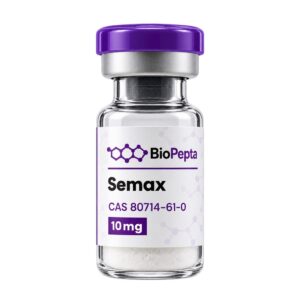
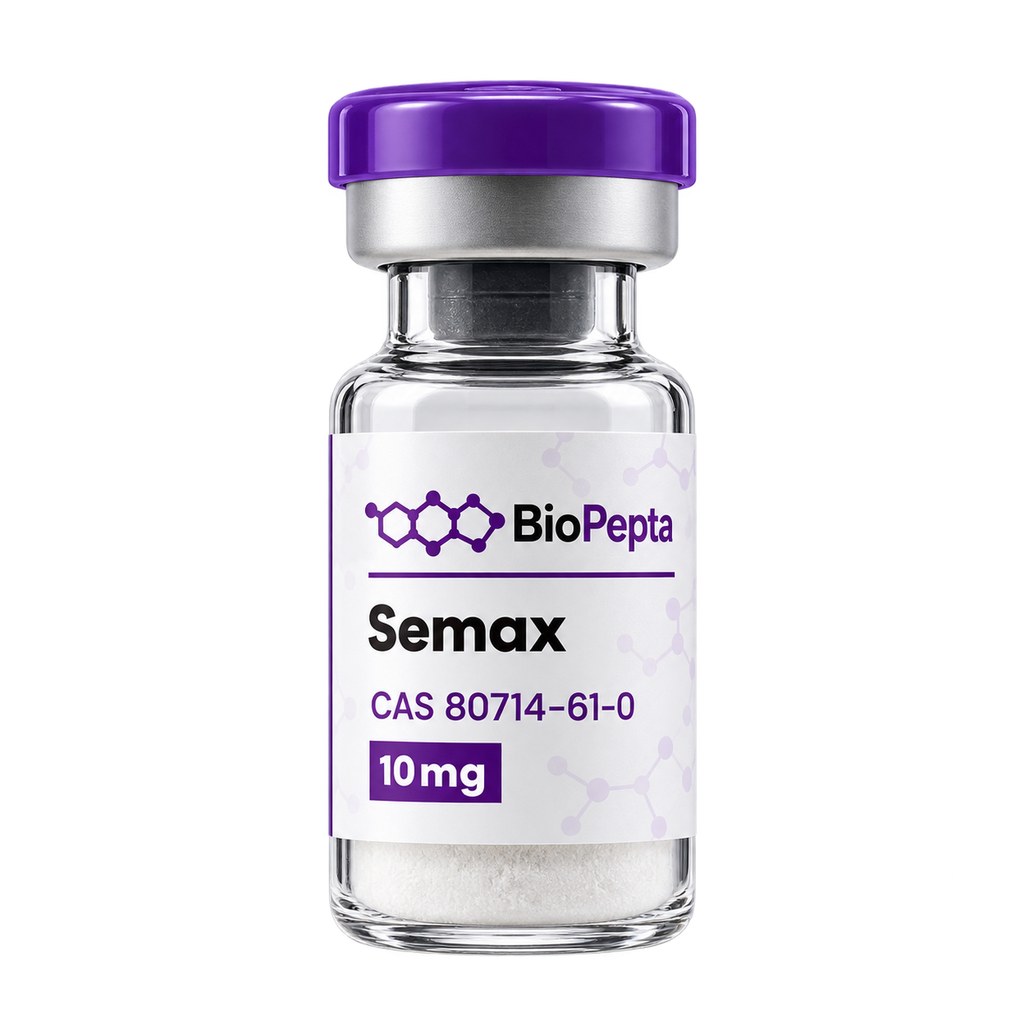
Semax 10mg (10 Vials / Kit)
$51.00 $0.51/mg
Selank 10mg (10 Vials / Kit)
$69.30 $0.69/mg
About an order? Include your order number. We never ask for passwords or seed phrases.
Before you enter
GLP1 Chat Vendors lists research peptides for laboratory and educational use only. Nothing on this site is medical advice or intended for human consumption.
By continuing you confirm that you are 21 or older and agree to our Terms of Service.
Reviews
There are no reviews yet.