Spotting Good and Bad Freeze-Dried Peptides: A Visual Checklist
A GLP1 Chat Vendors reference for buyers. Educational and laboratory-quality information only; it is not medical advice.
Lyophilization pulls the water out of a peptide so the product can travel and sit on a shelf as a dry solid, which lasts much longer than a liquid. How well that solid was made, and how it behaves when it meets a solvent, tells you a lot about what is in the vial. This guide covers the checks you can do by eye and with a simple strip, what each failure may mean, and the steps that reduce the odds of receiving a bad vial. Appearance supports lab analysis and never replaces it, so read our third-party testing guidance and treat everything here as a second layer.
Stage one: inspect the dry vial
Before any liquid goes in, the cake or powder already offers clues. Look at its color, its texture and how dry it seems.
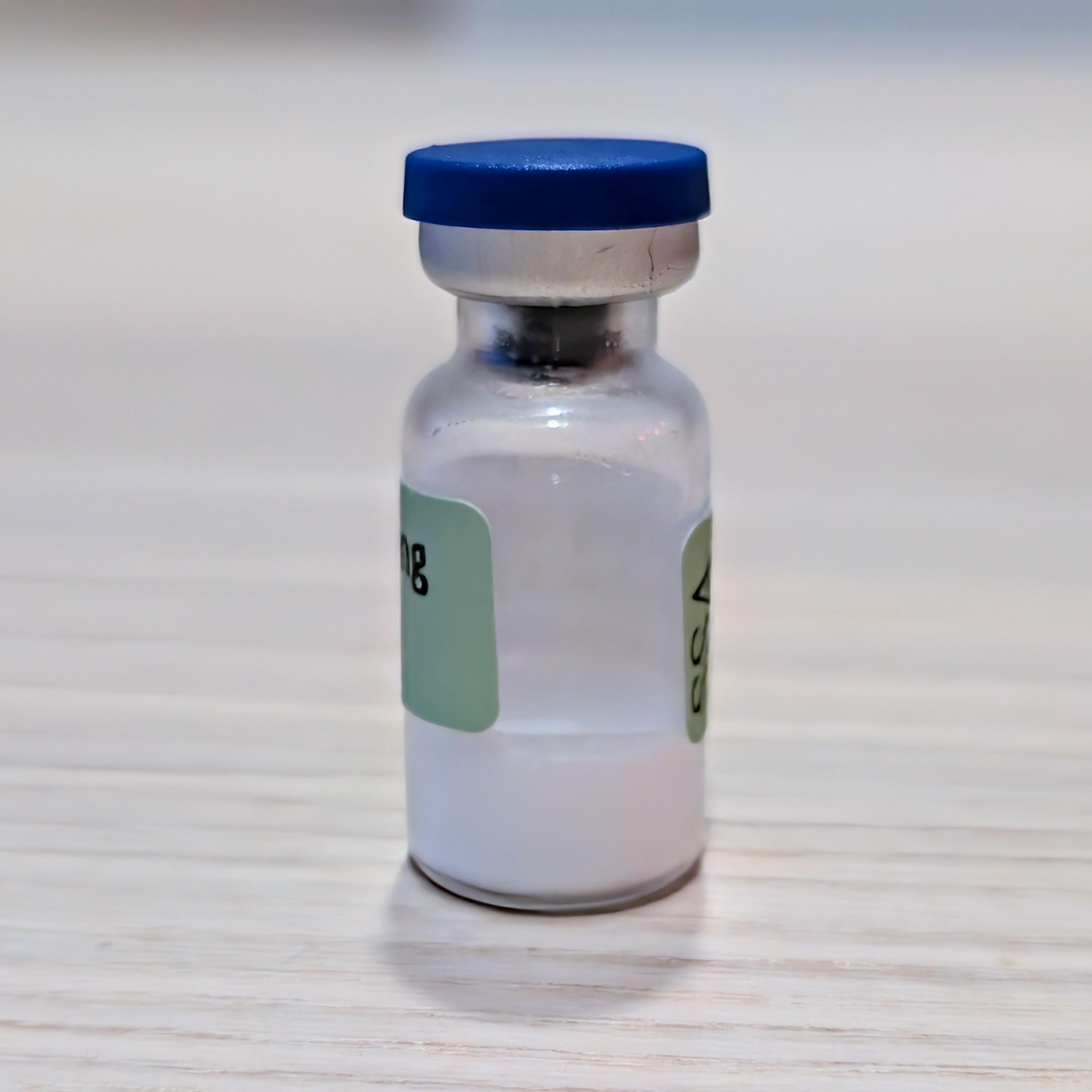
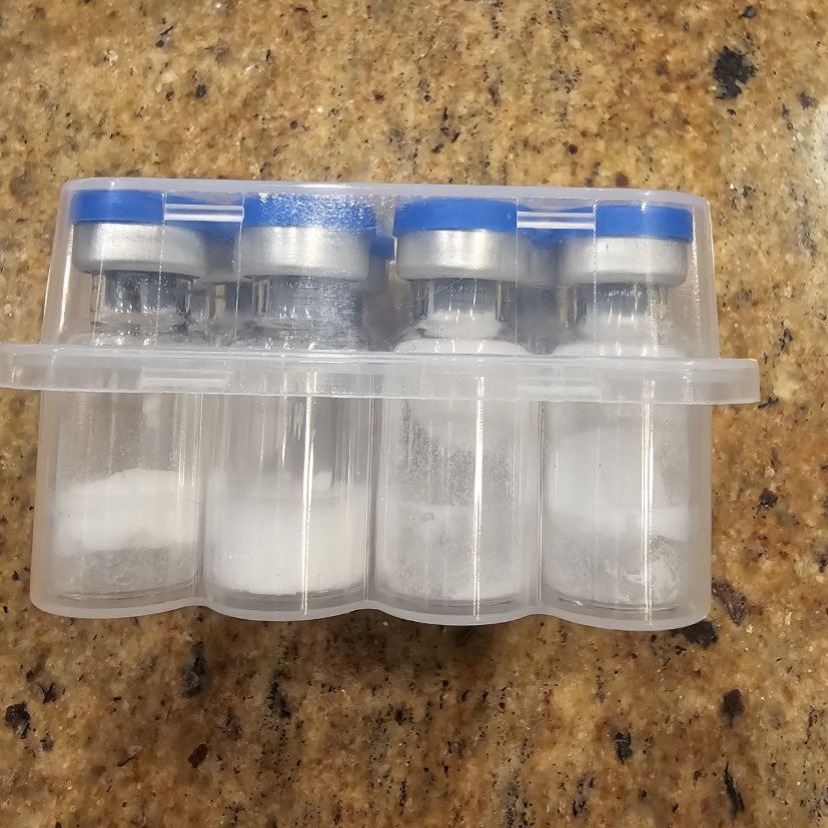
What good looks like
- Uniform and white: quality material appears consistent from top to bottom, a smooth white solid without coarse crystals or colored patches. A cake that has split or crumbled is not alarming on its own, because these pucks break up easily during shipping.
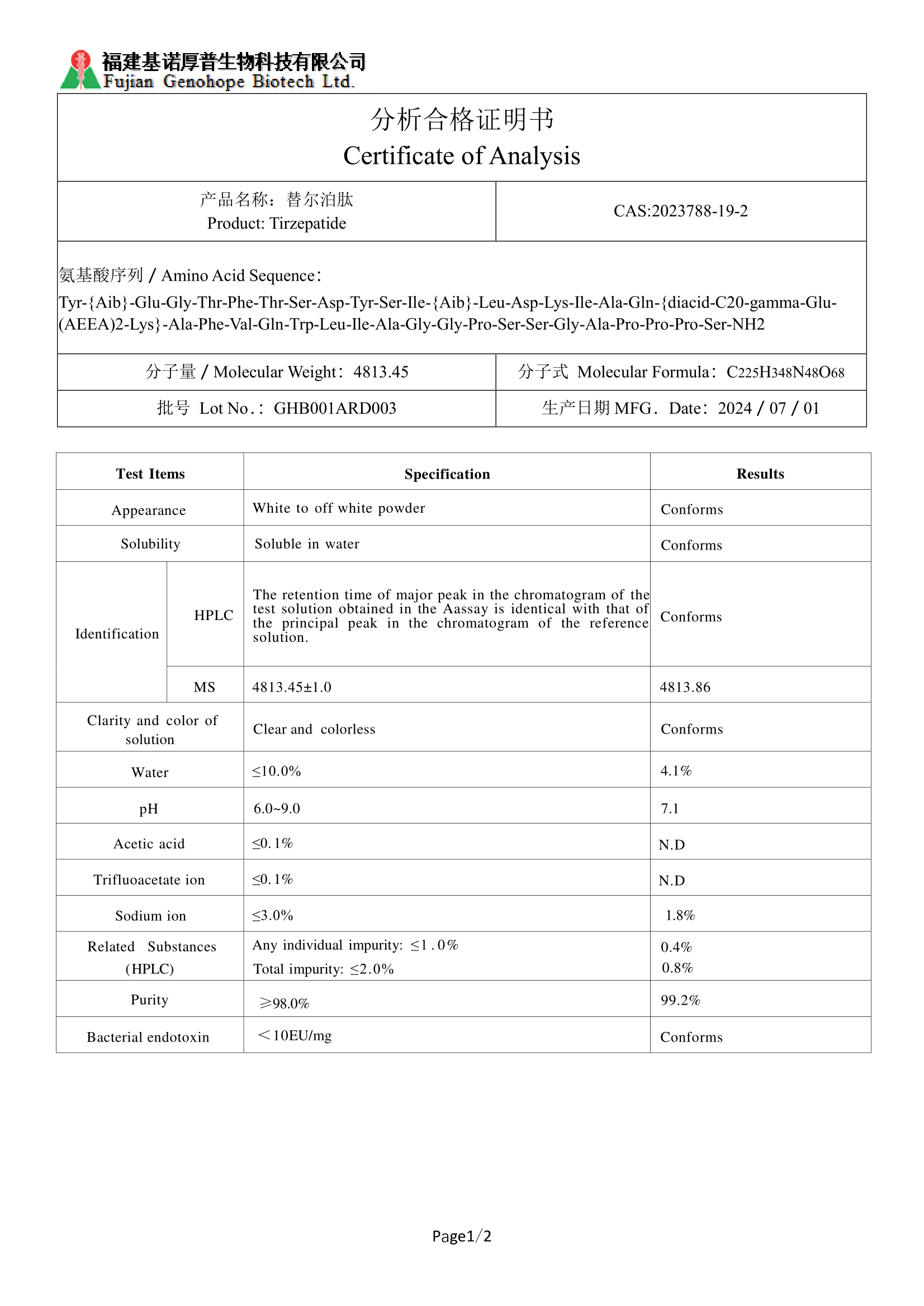
- Dry throughout: nothing should seem moist, glassy or crystalline. As a benchmark, freeze-dried peptides are generally expected to contain under 3% water (source), though you cannot confirm that number without a lab. Bulk tirzepatide API is specified more loosely, at below 10% water (source).
What should worry you
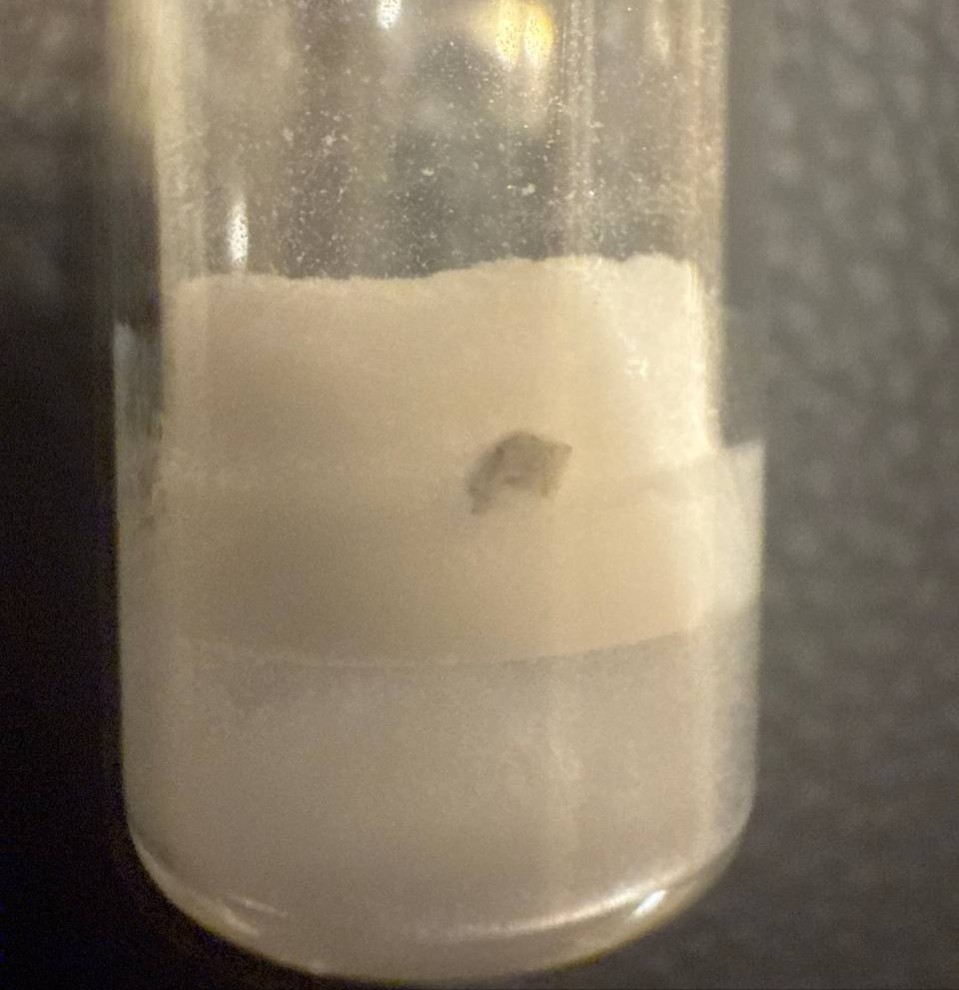
- Off-color or foreign bits: a yellow or brown cast, specks, fibers or visible particles point to degradation or contamination during production. Some products are tinted deliberately, such as the Glow blend, which is meant to be blue, so compare against the listing description. If it is not supposed to be colored, set the vial aside as unusable.
- Wet, sticky or clumped: a cake that appears damp, tacky or coated in a thick granular film has picked up moisture. Water speeds chemical breakdown, so the contents probably differ from what the label promises. Do not use it.
Stage two: inspect the liquid
Once a vial has been reconstituted for lab work, three things offer an independent read on quality and stability: clarity, color and pH.
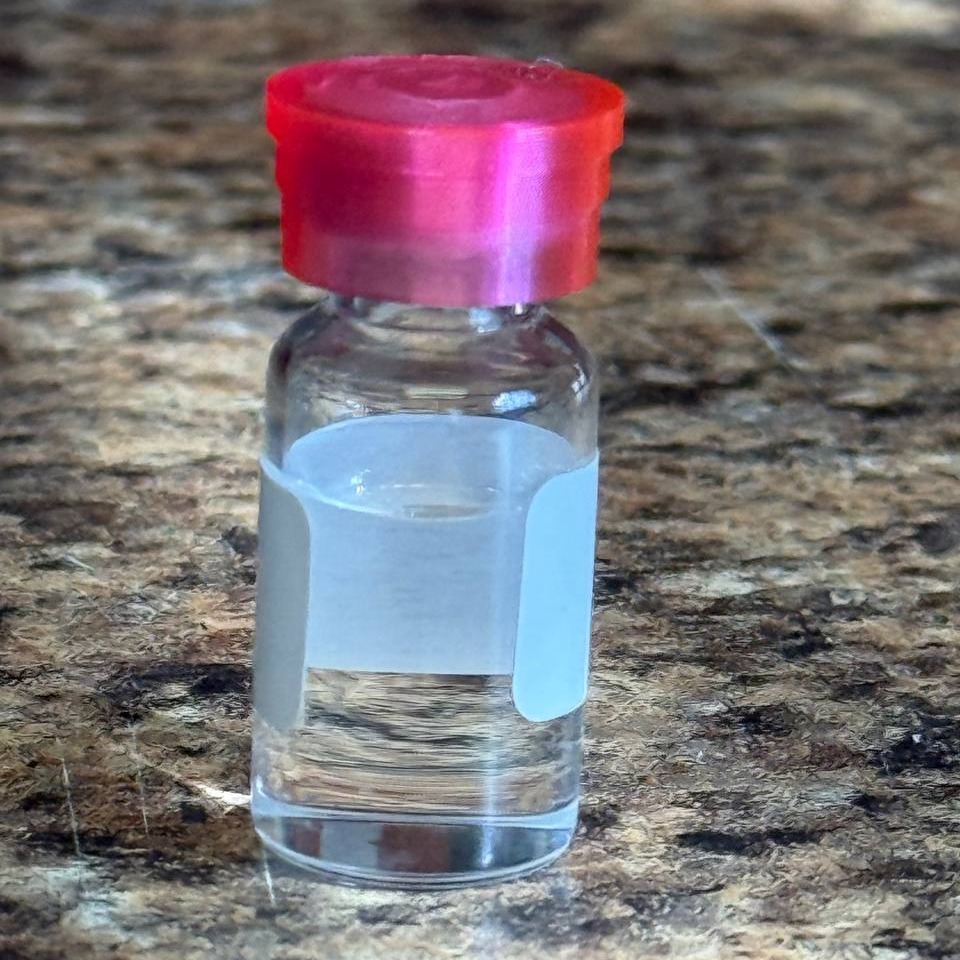
A healthy solution
- Transparent and colorless: the liquid should look like water, without haze or anything drifting in it. That fits a peptide that dissolved completely and a sample free of visible contamination.
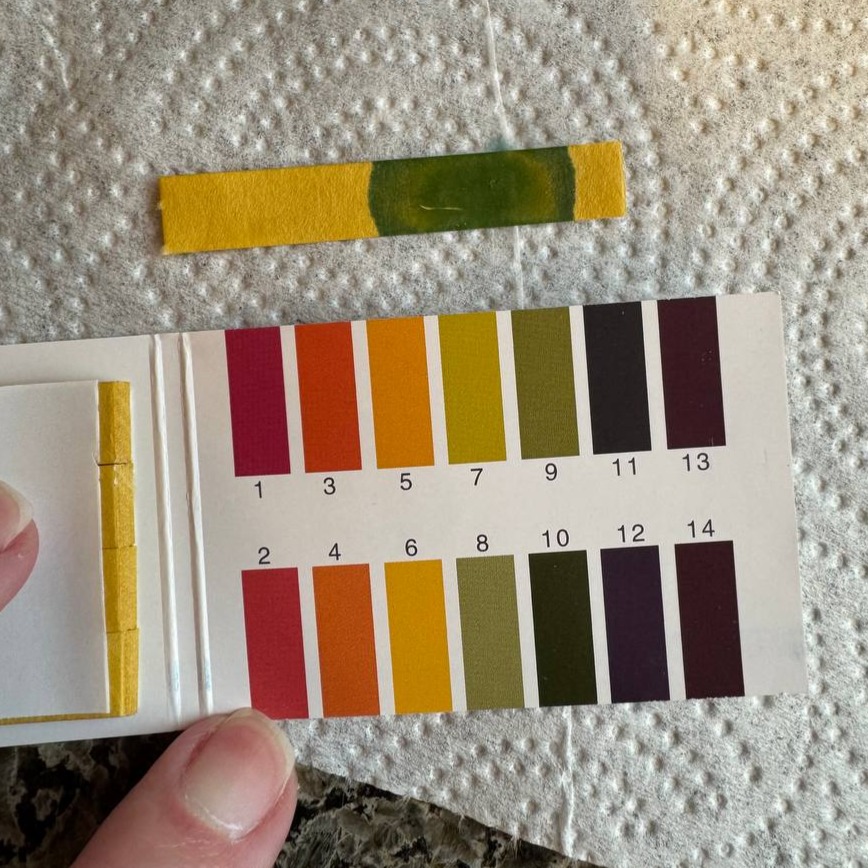
- pH in range: every peptide has a pH window where its solution stays stable. For tirzepatide and retatrutide, that window is typically about pH 6 to 9 (source). A strip or meter reading inside it suggests the material and solvent are what they should be, and that the solution is less likely to degrade or aggregate.
Red flags in the liquid
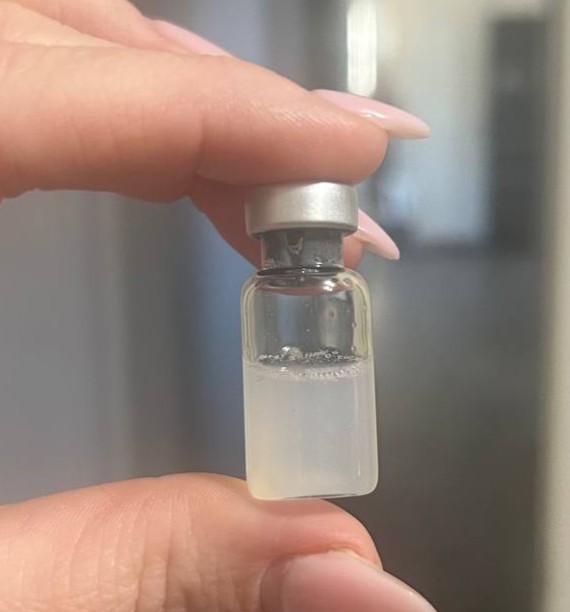
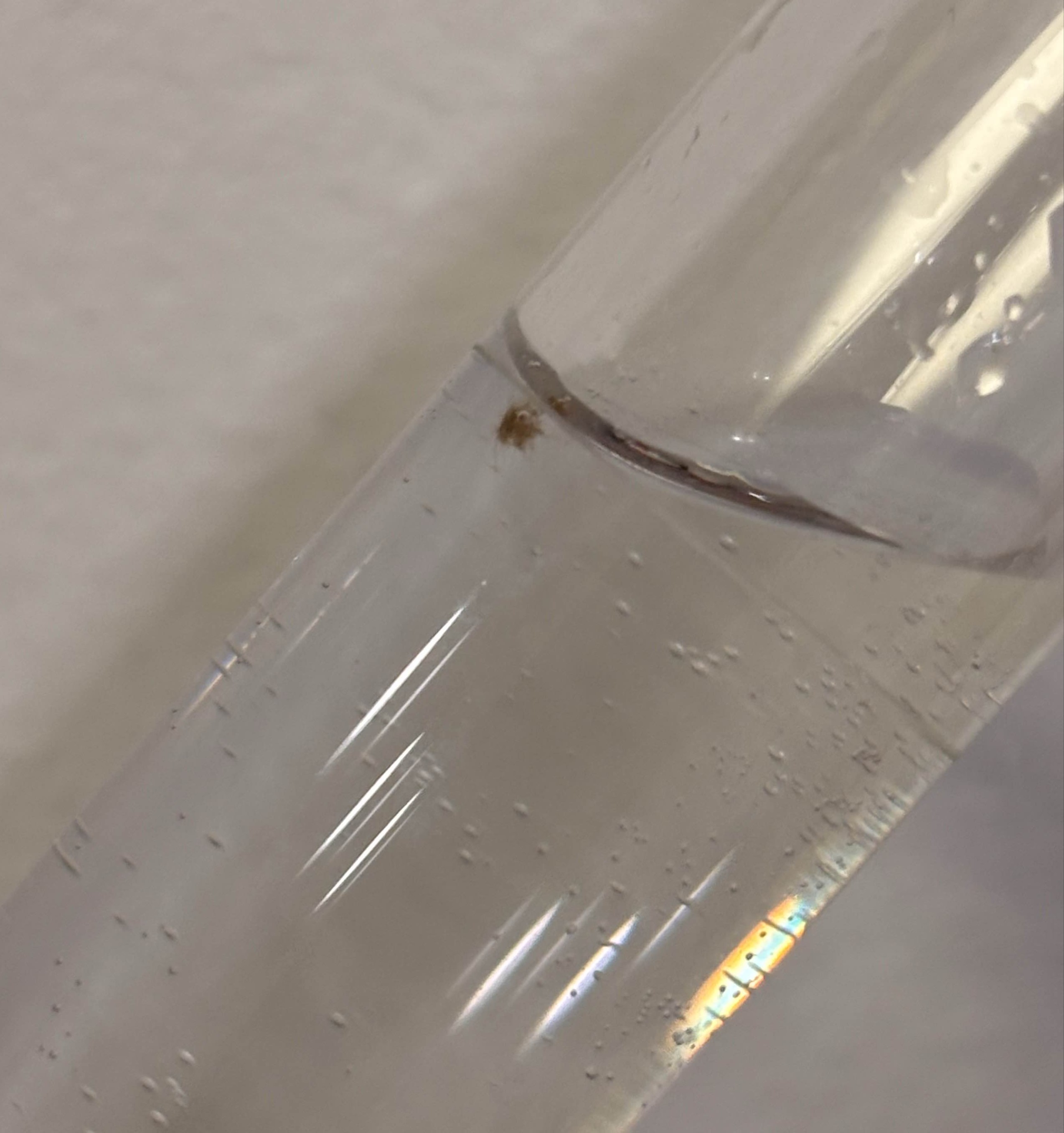
- Cloudiness, color or floating bits: these can mean the peptide failed to dissolve or that impurities are present, both of which trace back to weak manufacturing or a compromised batch. If solids remain after half an hour, treat the vial as failed.
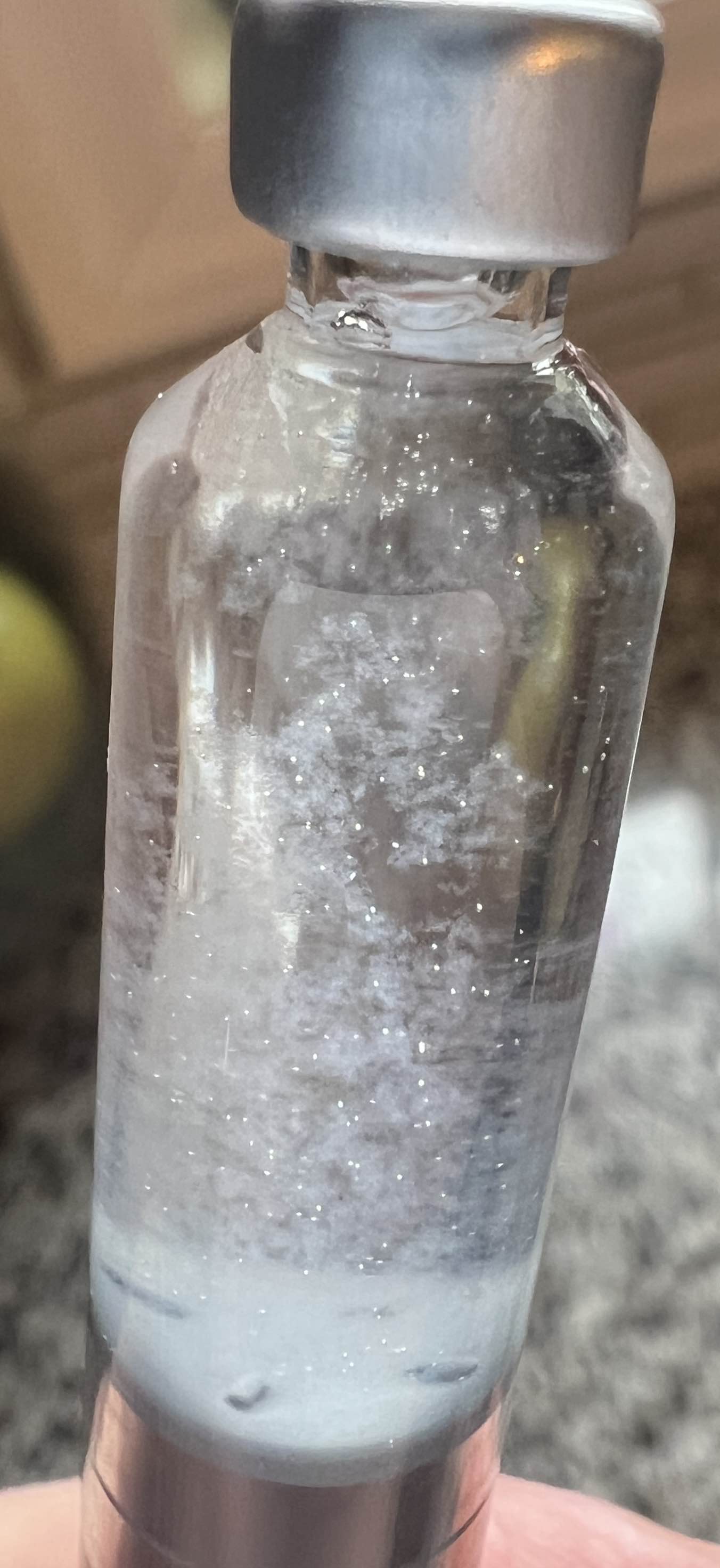
- Gelling or precipitate: when a solution thickens into a gel, the peptide’s folded structure has changed, a process known as aggregation. Aggregated material may not engage its target receptors as designed and ties into the quality problems covered below. Do not keep it.
- pH far outside the target: a reading well away from the peptide’s specified window suggests the wrong material, the wrong solvent or breakdown. Formulation literature treats roughly pH 4 to 9 as the outer working range for formulated peptide products (source). A result outside it, or one at odds with the listing, is a cue to put the vial aside instead of attempting a fix, unless buffering peptides is already part of your expertise.
Why these failures matter
When peptides are made or kept poorly, the damage tends to fall into three recognizable groups (source).
1. Altered structure
Aggregation, which shows up as gelling, and chemical changes such as deamidation, which often appear as a lower HPLC purity figure, alter what the vial really contains. So do undissolved solids and microbial growth in a solution stored too long. The biologics literature documents that modified or clumped protein and peptide products can provoke unwanted immune responses, including antibodies that cross-react with similar natural molecules. That is why anti-drug antibody (ADA) testing is a routine part of many biologic development programs (source, source).
2. Lost or misdirected activity
A peptide with a changed shape may simply stop doing what it was designed for, or it may bind targets it was never meant to touch. For a lab, either outcome means data you cannot attribute to the compound on the label. The mildest case is an inactive sample that does nothing (source).
3. Unstable or mismatched solutions
Liquid sitting outside the pH range specified for its peptide breaks down and clumps more readily; GLP-1 class peptides are generally held at pH 6 to 9 to stay stable. A surprising reading may also be the first hint of mislabeling, meaning the contents are another compound, salt or solvent altogether. Look up the documented range for your exact peptide before you reconstitute it (source).
Five ways to cut the risk
No single step is foolproof. Layered together, they make it hard for a poor batch to get through.
Begin with sellers who have history
Standing in the research community is a sensible first filter. Brands on GLP1 Chat Vendors are vetted, and many listings link independent lab reports you can read before buying. Ignore unsolicited direct messages from strangers selling product; that route often leads to counterfeit or mislabeled goods.
Send a sample for analysis
Whether a vial is the right compound, how pure it is and how much is really inside can be established only by third-party (3P) analysis. Our Testing 101 guide describes which tests are worth ordering and when.
Inspect each vial at both stages
Examine the dry cake as soon as it arrives, then the liquid after reconstitution. Gel, haze or particles at either point are grounds to discard the vial; a sample that fails on sight should not go into any further work.
Keep it cold, dry and dark
Freeze-dried peptides do best stored in a cold, dry place away from direct light, and should be dissolved only shortly before they are needed because solutions degrade faster than the solid. For the long term, holding lyophilized kits frozen between -80°C and -20°C (-112°F to -4°F) extends shelf life (source).
Match the solvent to the peptide
Guidance differs between peptides, and an incorrect diluent or pH can leave a solution gelled or aggregated. Documentation for GLP-1 class peptides usually names bacteriostatic water as sufficient by itself, whereas some other peptides call for acetic acid or a different solvent to keep the pH where it belongs.
Bottom line
Solid quality control comes down to four habits: buy from vetted, established brands; confirm purity and fill with independent testing; examine both the powder and the solution for signs of aggregation or contamination; and stay within each peptide’s documented storage and reconstitution conditions. Between them, they cover each other’s blind spots.
Spotted a mistake, or want to suggest an improvement? Please tell our support team.
Your Cart
 Arctic Labs3 products · 3 lab-testedVisit store →
 AUverifiedPeptides9 products · 9 lab-testedVisit store →
 Azentra Laboratories1 product · 1 lab-testedVisit store →
 Biohack Peptides4 products · 4 lab-testedVisit store →
 BioPepta22 products · 20 lab-testedVisit store →
 Core Peptides10 productsVisit store →
 Cyprus Peptides93 productsVisit store →
 European Peptide Sciences34 productsVisit store →
 EuropePeptide13 productsVisit store →
 HK Peptide111 products · 53 lab-testedVisit store →
 HKTide Biotech1 productVisit store →
 HPEBIO20 products · 19 lab-testedVisit store →
 Imperial Peptides20 products · 15 lab-testedVisit store →
 InnoPeptide2 products · 2 lab-testedVisit store →
 Jinlu Peptides50 productsVisit store →
 JP8 products · 8 lab-testedVisit store →
 Kensington Biosciences26 productsVisit store →
 Lab77 Peptides33 products · 18 lab-testedVisit store →
 Lianhua Peptide Co.37 productsVisit store →
 Lilipeptide49 productsVisit store →
 Limitless BioChem2 products · 2 lab-testedVisit store →
 Maxed Out Compounds11 products · 9 lab-testedVisit store →
 MEI-PEPTIDE5 products · 5 lab-testedVisit store →
 MJT Peptides1 product · 1 lab-testedVisit store →
 Nouveaux2 products · 1 lab-testedVisit store →
 Peptide Express21 productsVisit store →
 Purus Peptides8 products · 8 lab-testedVisit store →
 SSRBIO69 productsVisit store →
 Sulan Bio46 products · 12 lab-testedVisit store →
 SynTide Research12 productsVisit store →
 TFC Peptides192 productsVisit store →
 TOP Peptide2 products · 2 lab-testedVisit store →
 Uther Peptide105 products · 87 lab-testedVisit store →
 UWA Biotech21 products · 20 lab-testedVisit store →
 Vital Edge Science14 products · 14 lab-testedVisit store →
 Zhejiang Peptide Co.2 productsVisit store →
 Zhuoyan Laboratory Peptide Co.1 product · 1 lab-testedVisit store →
 Zyn Pharma12 productsVisit store →Compare all brands →
All Categories
Search
Semax 10mg (10 Vials / Kit)
$51.00 $0.51/mg
Selank 10mg (10 Vials / Kit)
$69.30 $0.69/mg
About an order? Include your order number. We never ask for passwords or seed phrases.
Before you enter
GLP1 Chat Vendors lists research peptides for laboratory and educational use only. Nothing on this site is medical advice or intended for human consumption.
By continuing you confirm that you are 21 or older and agree to our Terms of Service.